
 Cart is empty

Using GLP-1? How to Navigate Facial Fat Loss or “Ozempic Face”
The rise of GLP-1 medications like Ozempic and Wegovy has changed metabolic health and weight management. As many people achieve major body transformations, a cosmetic side effect has emerged: “Ozempic Face.”
“In my clinic, I frequently see patients coming off rapid weight loss journeys who are hesitant to jump straight to heavy dermal fillers. Using a bio-restorative approach like Adipeau allows us to prime the tissue base first—giving us far more predictable and natural outcomes if we do decide to layer in skin boosters or light fillers later.”
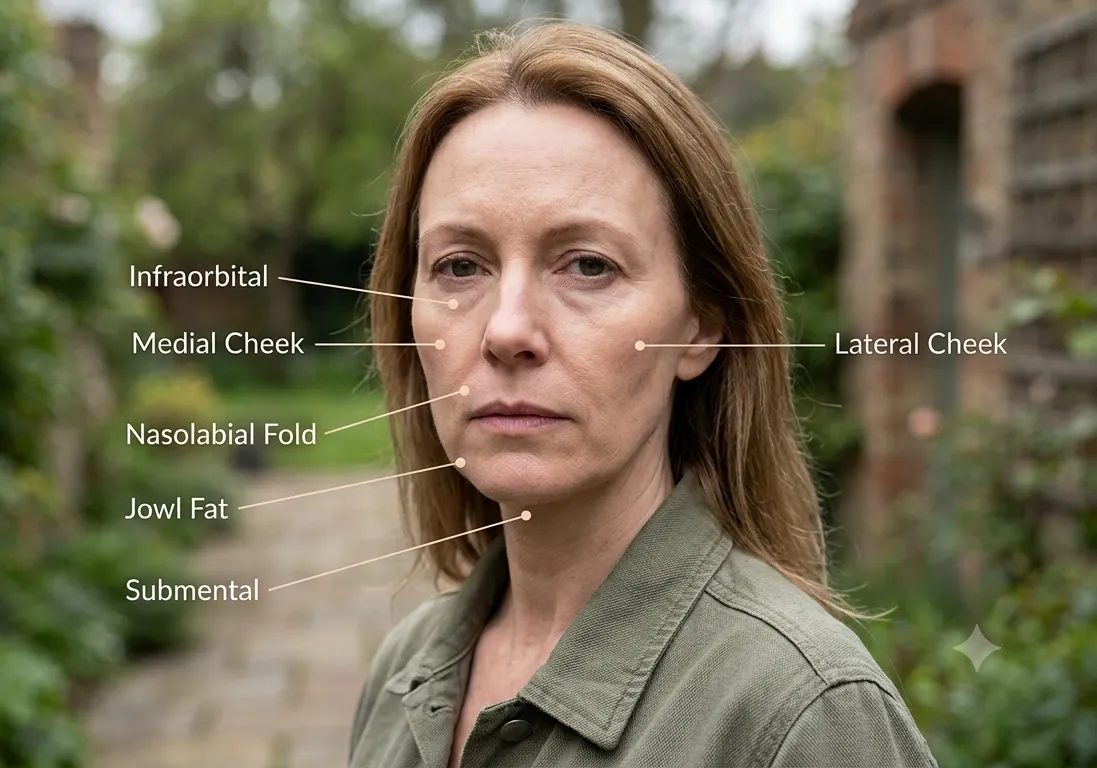
When weight drops rapidly, the face is often one of the first places to show it. Loss of deep subcutaneous fat leaves the skin looking deflated, hollow beneath the eyes, and sagging around the jawline and nasolabial folds.
While dermal fillers have long been the default solution for volume loss, they can camouflage the issue by adding an artificial, water-binding gel. Today, we look at a different, biology-first approach: Adipeau Volume Cream. Rather than adding synthetic volume, Adipeau targets the root cause of deflation by supporting the health and regeneration of natural fat cells.
The Biology of “Ozempic Face”
To understand why Adipeau suits this concern, we must look at what happens under the skin during rapid weight loss.
Facial youthfulness depends on subcutaneous adipose tissue—small, well-distributed fat compartments that act as the structural scaffolding for the face. When you lose weight rapidly on a GLP-1 agonist, two things can happen to this tissue:
- Adipocyte Shrinkage: Existing fat cells can shrink dramatically, leaving empty space beneath the dermis.
- Loss of Restorative Function: The skin may lack the immediate signalling needed to recruit new, healthy adipocytes (fat cells) to sustain structural suppleness.
The result can be a thin, tired appearance, as the skin outgrows its underlying support system.
“In landmark STEP 1 clinical trials evaluated by the New England Journal of Medicine (Wilding et al., 2021), patients on semaglutide lost an average of nearly 15% of their total body weight, with DXA scans showing that this drop was overwhelmingly driven by the depletion of subcutaneous fat tissue—the exact structural layer that supports the face.”
How Adipeau Offsets the Deflation
Adipeau does not “create” random fat. Instead, it acts as a targeted fitness program for facial fat cells, using a specialised delivery system to reach the root structural layers.
The formula relies on two primary, research-backed active ingredients:
- Safflower Seed Oil: Rich in specific fatty acids that can support healthy adipocytes and efficient lipid storage.
- Black Cumin Seed Oil: An anti-inflammatory ingredient that may help create a better micro-environment for healthy fat cell function and longevity.
By delivering these targeted nutrients directly to the root structure, Adipeau may help restore the natural volume of shrunken cells and support regeneration of the cellular matrix. It may smooth hollows and lift the midface naturally.
Why Choose Adipeau Over Traditional Fillers?
While dermal fillers provide instant gratification, they can have limitations when treating systemic, rapid volume loss:
- Weight & Sagging: Over-filling a face that lost structural fat can lead to a heavy, unnatural “pillow-face” appearance. The face may look filled but not youthful.
- The Biological Approach: Adipeau aims to preserve your unique facial anatomy. It does not alter your features; it restores the structural cushion you had before weight loss.
- The Perfect Clinical Synergy: If you choose to use dermal fillers, Adipeau can serve as a basic treatment. Improving the health of surrounding fat tissue may create a more supportive environment for the filler, often resulting in a more natural look and longer-lasting results.
The Protocol: How to Use Adipeau for Maximum Results
Because Adipeau targets deeper subcutaneous layers rather than the surface skin, application technique matters.
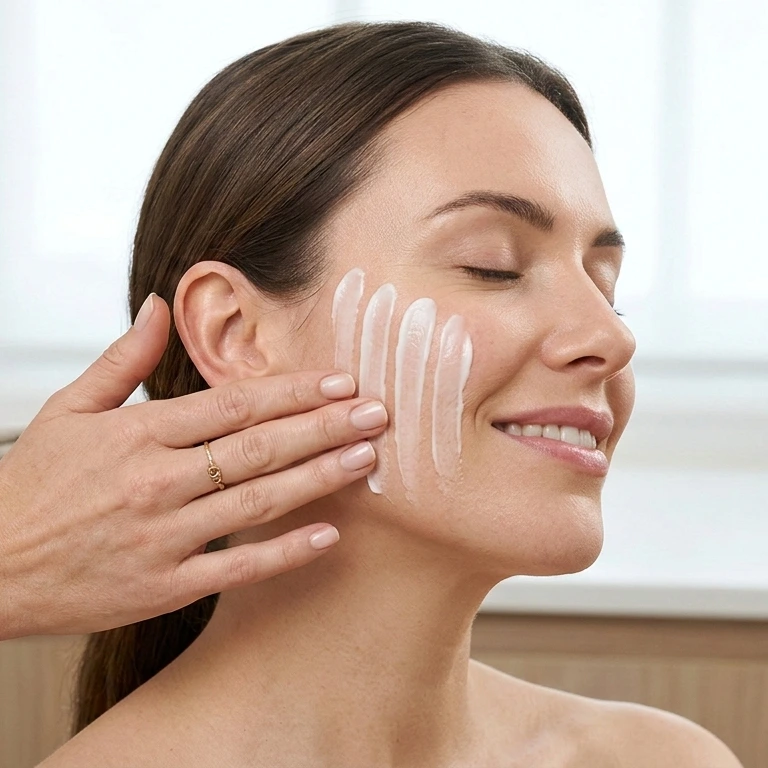
- Finger-Paint, Don’t Rub: Adipeau uses a specialised slide-and-glide delivery system. Do not rub the cream into the skin like a traditional moisturiser. Instead, “finger-paint” a visible layer onto target areas such as under-eye hollows, cheeks, and nasolabial lines.
- Let It Sink In: Allow the cream to sit on the skin and absorb passively over 10 to 15 minutes.
- Consistency Is Fundamental: Structural restoration takes time. Apply Adipeau once or twice daily. While superficial radiance and plumping may appear quickly, structural remodelling usually becomes visible after 4 to 8 weeks of regular use.
The Bottom Line
Achieving your health and weight goals should not mean compromising your facial structure. If you are managing structural changes from rapid weight loss, you do not have to jump straight to aggressive needles or invasive procedures. By supporting facial fat cells with what they need to rebuild, Adipeau offers a biologically grounded path back to a glowing, lifted, and proportioned profile.
Written by Sabine Lepere – Senior Aesthetic Practitioner & Founder at Windsor Mews Clinic
Medically Reviewed: July 2026
Disclaimer: This article is for informational purposes only and does not constitute formal medical advice. Consult a qualified practitioner for a personalised treatment plan.
Citation
Step 1 Clinical Trial
Wilding, J. P. H., Batterham, R. L., Calanna, S., Davies, M., Van Gaal, L. F., Lingvay, I., McGowan, B. M., Rosenstock, J., Tran, M. T. D., Wadden, T. A., Wharton, S., Yokote, K., Zeuthen, N., & Kushner, R. F. (2021). Once-Weekly Semaglutide in Adults with Overweight or Obesity. New England Journal of Medicine, 384(11), 989–1002. https://doi.org/10.1056/nejmoa2032183
